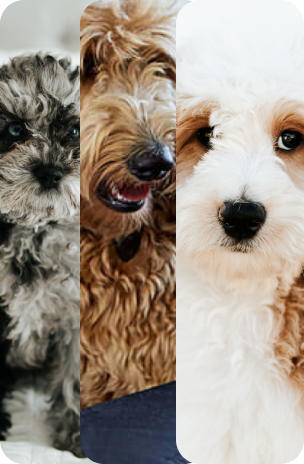

Sherri Smeraglia explains the differences between the generations of our breeds here at Smeraglia Teddybear Goldendoodles.
Watch short Film
We also have a selection of puppies who are available for immediate adoption.
View All Puppies Close
Close


On the way home this evening, my phone rang.
It was my son Lukas.
Now if you’re a mama, you know how that works. Our kids may grow up, move out, and build their own lives, but when something is wrong… Mama still gets the call.
And truthfully, I love that.
My kids call me about all kinds of things — life questions, cooking questions, grandkid questions, and of course…
doodle questions.
This time Lukas sounded concerned.
“Mom, something is wrong with Maddie’s tail.”
Maddie is Lukas’s Goldendoodle, and like most doodles she is full of personality, energy, and enthusiasm. He sent me several close-up photos so I could take a look.
Within a few seconds of seeing the pictures, I knew what we were likely dealing with.
The very tip of her tail looked wet, irritated, and inflamed. Lukas also said she kept turning around trying to lick it, and that it had started to develop a bit of that “yucky smell” that sometimes happens with irritated skin.
Based on the photos and description, it looked very much like the beginning of a hot spot.
Since Lukas doesn’t live close enough for me to simply grab Maddie and treat it myself, we walked through exactly what he needed to do.
And as we talked, I thought to myself…
This is actually something many doodle owners run into, especially during certain seasons of the year.
So I decided to turn Maddie’s little tail situation into a quick educational moment for our Teddy Bear Goldendoodle family.
Why Goldendoodles Sometimes Get Hot Spots on Their Tails
Goldendoodles and other doodle breeds are known for their big personalities and happy tails.
And when I say happy tails, I mean really happy tails.
They wag with enthusiasm, sometimes like a helicopter blade.
That wagging can sometimes lead to what veterinarians call “Happy Tail.”
This happens when the tip of the tail repeatedly bumps into things like:
• walls
• furniture
• door frames
• crates
• stair rails
Over time that repeated contact can irritate the skin.
But tail irritation can also start from other common causes, especially during warmer months.
These include:
• bug bites or insect stings
• allergies
• moisture trapped in the coat
• small scratches or abrasions
• seasonal skin irritation
Once the dog begins licking the area, the problem can escalate quickly.
Moisture becomes trapped under the coat, bacteria begin to grow, and suddenly you have what we call a hot spot.
One of the first signs many owners notice is:
• a wet area in the fur
• red or irritated skin
• constant licking
• sometimes a strong odor
Sound familiar?
That’s exactly what Lukas was describing.
The First Thing I Told Lukas: Stop the Licking
When it comes to hot spots, the most important step is preventing the dog from continuing to lick the area.
If they keep licking it, the skin stays moist and irritated, and healing becomes almost impossible.
Since Lukas was heading to PetSmart, here’s exactly what I recommended.
If Your Doodle Has a Hot Spot: What to Grab at PetSmart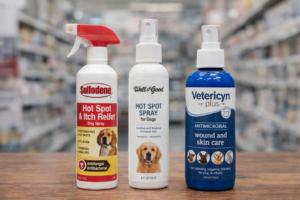
If you ever find yourself making a quick PetSmart run for a situation like this, here are three things I recommend.
1. A Cone (E-Collar)
This is the most important step.
A cone prevents your dog from reaching the irritated area.
Soft cones are often more comfortable, but any properly fitted cone will work.
Once the licking stops, healing can begin.
2. Hot Spot Treatment Spray
Look for sprays labeled Hot Spot or Itch Relief.
Common options include:
• Veterinary Formula Hot Spot & Itch Relief Spray
• Sulfodene Hot Spot Spray
• other veterinarian-recommended hot spot sprays
These sprays help soothe irritated skin and control bacteria.
3. Vetericyn Antimicrobial Spray
This is another excellent product that many veterinarians recommend.
Vetericyn helps:
• clean irritated skin
• reduce bacteria
• support natural healing
How to Treat a Hot Spot at Home
Here’s the simple process I walked Lukas through.
1️⃣ Gently clean the area with warm water.
2️⃣ If possible, trim a small amount of hair around the irritated spot so the skin can dry out.
3️⃣ Allow the area to dry completely.
4️⃣ Apply the treatment spray.
5️⃣ Place the cone on your dog immediately so they cannot lick the area.
Repeat treatment two to three times daily.
Many mild hot spots improve quickly once the skin stays clean, dry, and protected from licking.
When It’s Time to Call the Vet
If you notice any of the following, it’s time to see your veterinarian:
• swelling
• pus or discharge
• spreading redness
• bleeding
• worsening odor
• no improvement within 48 hours
Some hot spots require prescription medication or antibiotics.
A Little Note From This Doodle Mama
I’ll admit, even though Lukas is grown and has his own household now, I still get these kinds of calls.
And honestly?
I love it.
Whether it’s my kids, my grandkids, my doodles, or my grand-doodles, Mama is always happy to help.
That’s part of what makes our Smeraglia family and Teddy Bear Goldendoodle community so special.
We look out for each other.
And sometimes that means helping a worried son figure out what to do about his doodle’s tail.
The Good News for Maddie
With the right care, most early hot spots clear up quickly.
Once the licking stops and the skin is treated properly, the body can begin healing itself.
Maddie is already on the road to feeling better.
And Lukas?
Well, he knows if anything else comes up…
Mama’s always just a phone call away.
Thank you so much for taking the time to read through my blog. Every word penned here comes straight from my heart, as I aim to share with you the knowledge and insights I’ve gathered over the years. My deepest hope is that you find joy, inspiration, and perhaps a little bit of wisdom in these pages. Remember, this journey we’re on together is all about the love and connection we share with our furry friends. So, sit back, enjoy the read, and let’s continue to grow and learn in this beautiful adventure of companionship.
Warmest wishes,
Sherri Smeraglia

Stay up to date with us, our whereabouts, and
events in your area.


 © Copyright Smeraglia Enterprises Inc, 2022

Already have an account? Welcome back!
Login